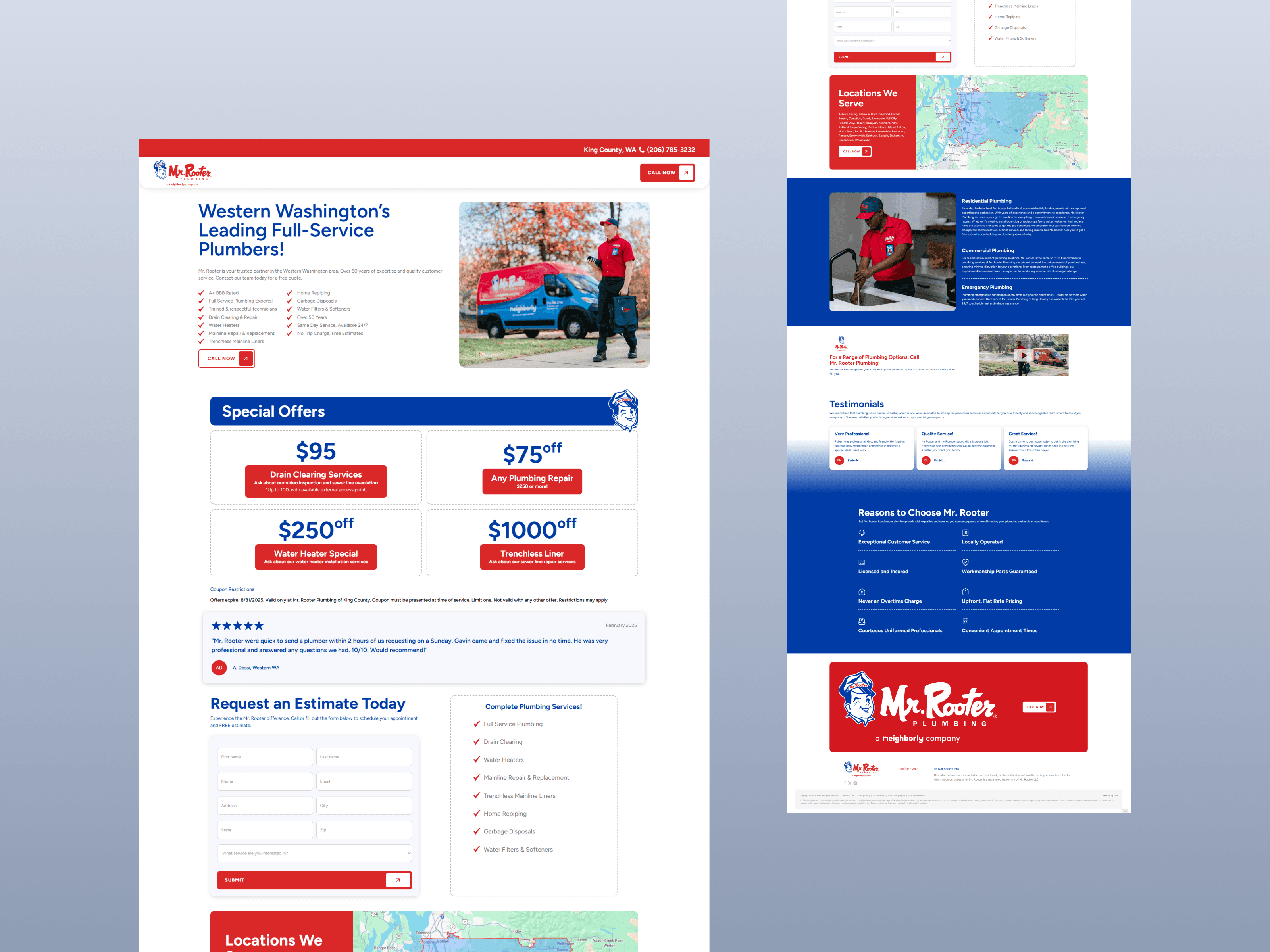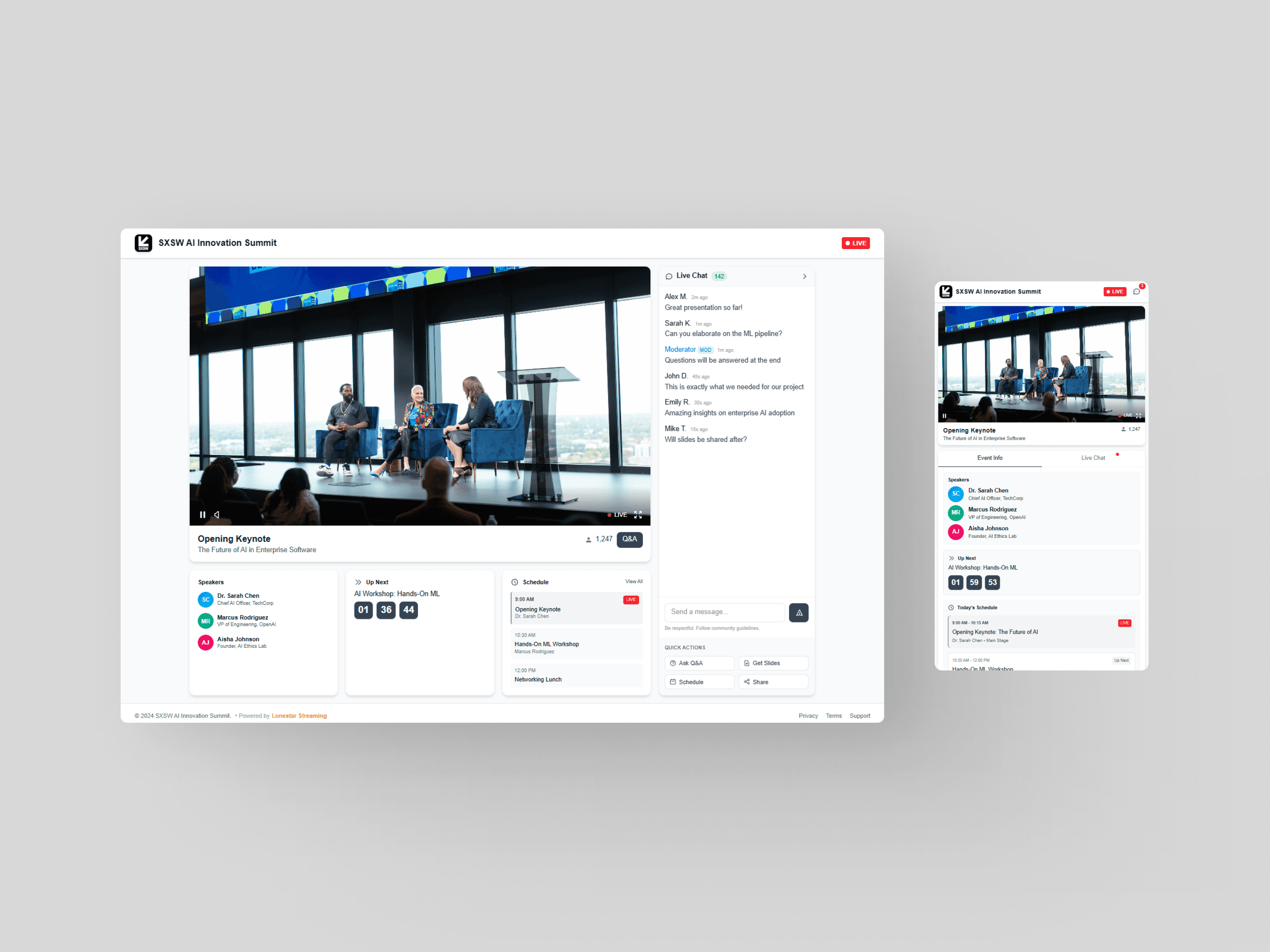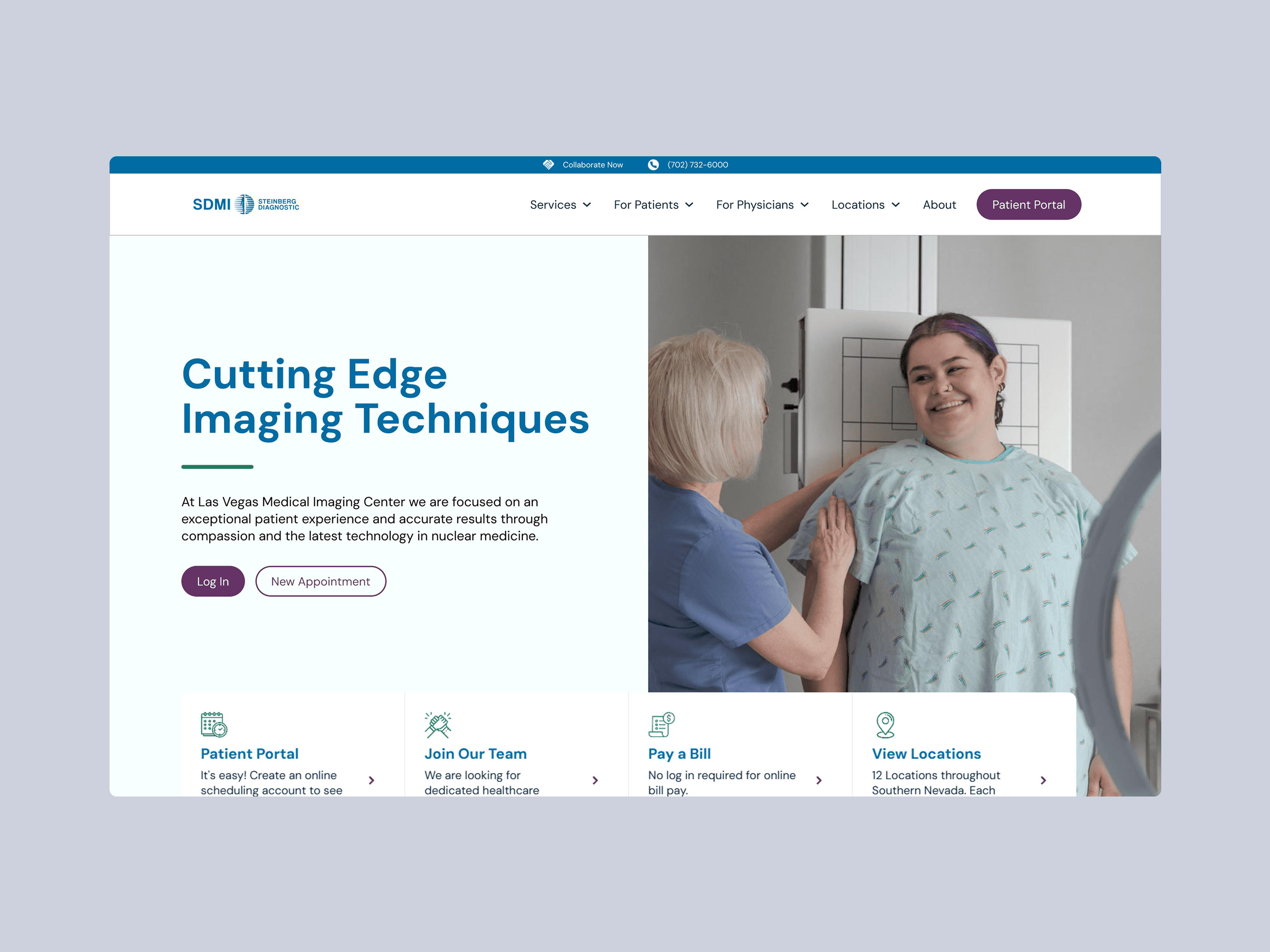
SDMI is a medical imaging center based in Las Vegas. Their website serves as a central hub where patients learn about services, schedule appointments, and access a secure portal to view and manage their results. Physicians also use the site to access resources and refer patients. I led a redesign focused on improving navigation, reducing confusion around the patient portal, and creating a more accessible experience overall.
Agency
LSM Works
Services
UX/UI Design Web Development
Industries
Healthcare
Date
2025
My Role
I was the solo designer on this project and led it end-to-end, from initial research through final delivery. I worked directly with the SDMI team to define requirements and conducted patient interviews to understand pain points.
Understanding the Problem
Before starting the redesign, I met with the SDMI team to understand their goals and the frustrations they were seeing with the existing site.
I also conducted interviews with patients to hear directly from the people using the site. A few key insights emerged:
Patients told us they often couldn't find the specific imaging service they needed and would call the front desk instead of booking online.
Several users described feeling "lost" when clicking into the patient portal because the interface looked completely different from the main site with no explanation of what to do next.
SDMI serves a diverse patient population, and non-English speakers had difficulty accessing important documentation and preparation instructions.
These findings validated what the SDMI team suspected but also highlighted how much friction the portal transition was creating.
The Challenges
The redesign needed to address three core problems:
Navigation and hierarchy: The existing site structure made specific services difficult to locate. Users couldn't quickly find what they needed, leading to drop-offs and unnecessary support calls.
Patient portal confusion: The portal was managed by third-party software we couldn't modify. When users clicked through, they landed in an unfamiliar interface with no context, causing frustration and abandoned sessions.
Accessibility gaps: Important documentation like preparation instructions and brochures weren't easily accessible, and non-English speaking patients had limited options.
Information Architecture
I started by mapping the existing site structure and identifying where users were getting stuck. Services were buried two or three levels deep with inconsistent naming conventions, forcing users to hunt for what they needed.
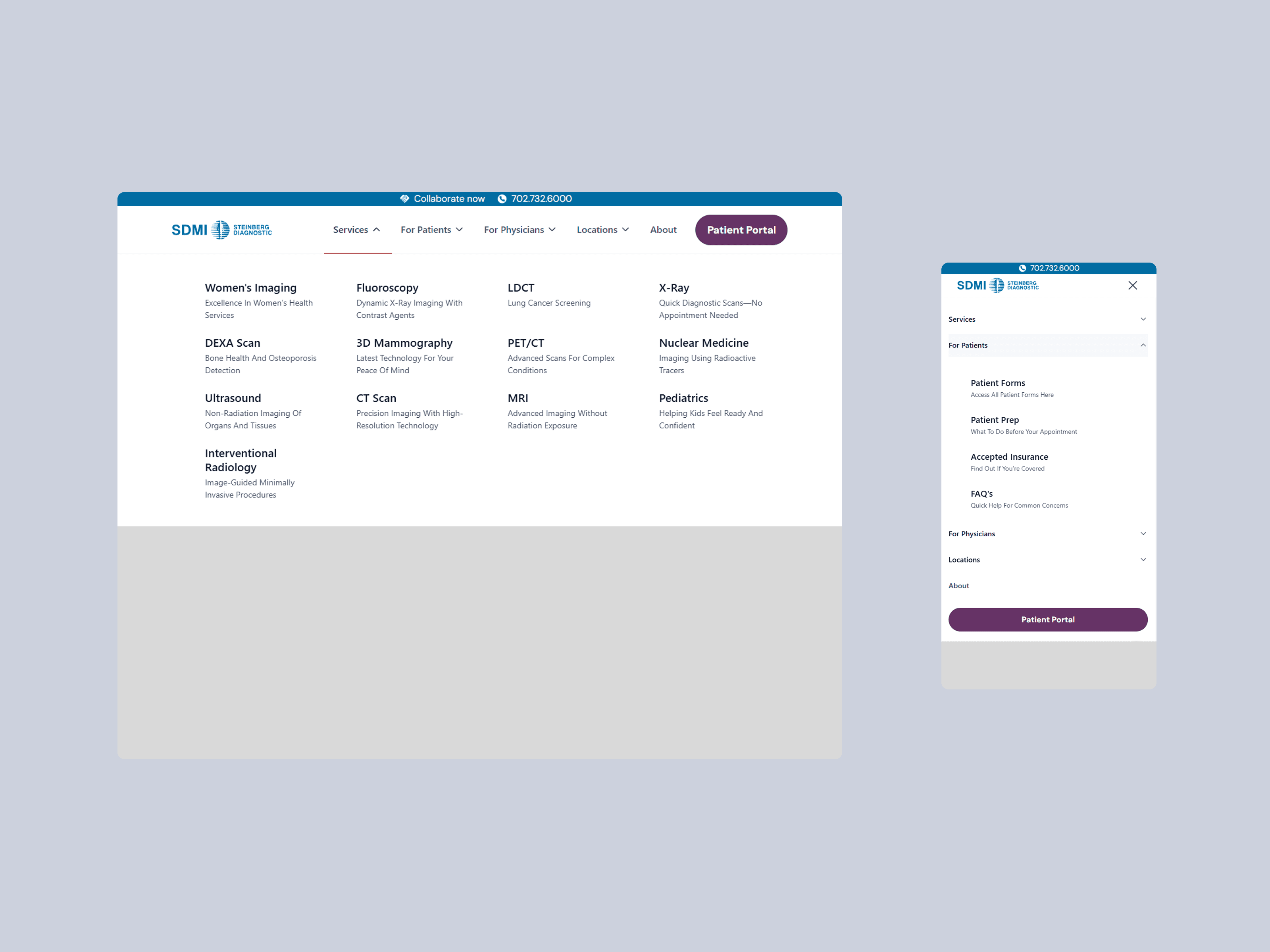
I redesigned the information architecture to create clearer hierarchy with logical subcategories. The new navigation featured dropdown menus that surfaced services and resources without requiring users to dig through multiple pages.
Patient Portal Bridge Pages
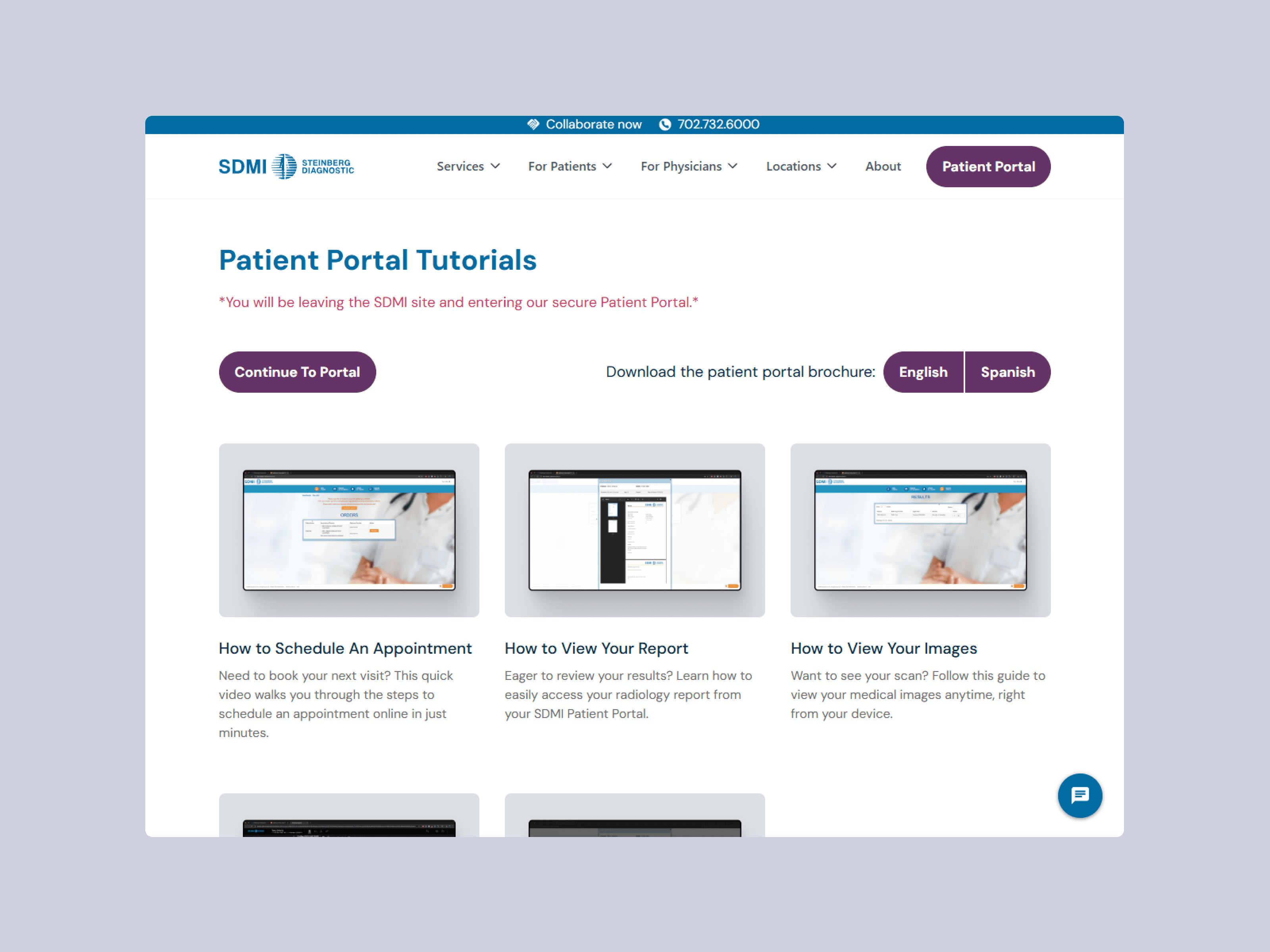
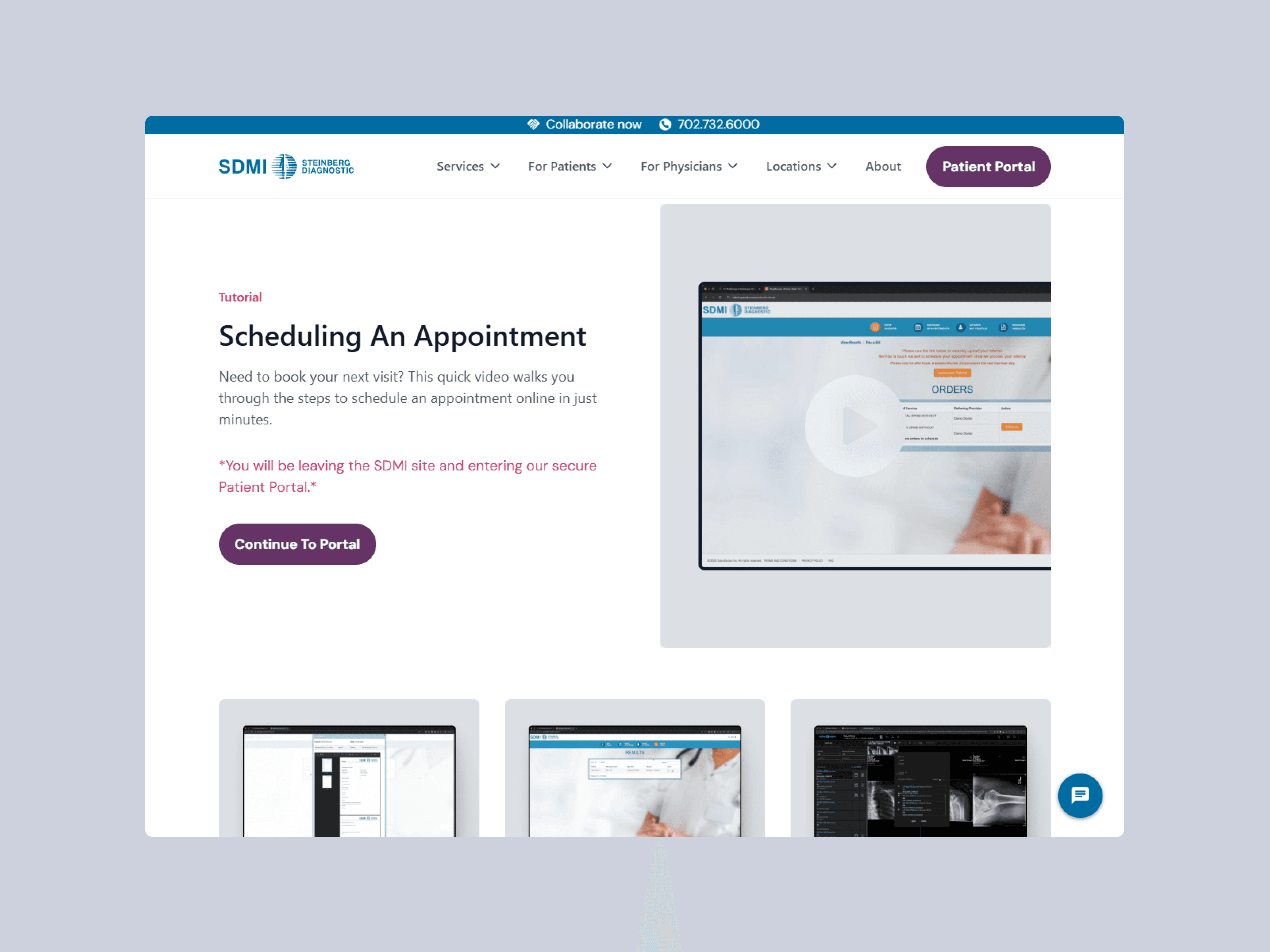
Since we couldn't redesign the third-party portal itself, I focused on improving the experience before users entered it. I designed bridge pages that served as a transition point, preparing users for what they'd encounter.
I created a user journey map to understand the different paths patients might take when accessing the portal and what questions they'd have at each step. This informed the content and structure of the bridge pages.
These pages included:
Clear messaging explaining what the portal was and what users could do there
A library of tutorials walking users through common tasks like viewing results and managing appointments
Direct links to relevant resources based on where users were in their journey
We prioritized tutorials based on the most common support ticket topics, ensuring we addressed the issues that were generating the most confusion.
Accessibility Improvements
To better serve SDMI's diverse patient population, I added downloadable brochures available in multiple languages. These were placed throughout the site at relevant touchpoints so patients could easily access preparation instructions and service information in their preferred language.
The Solution
Restructured information architecture: Reorganized services and resources into logical categories with defined navigation patterns that reduced clicks to key content.
Portal bridge pages: Created transitional pages with tutorials and contextual guidance to prepare users before entering the third-party portal.
User journey framework: Mapped patient paths through the portal experience to ensure bridge pages addressed needs at each step.
Multilingual accessibility: Added downloadable brochures in multiple languages, accessible throughout the site at key decision points.
Conclusion
The redesign successfully addressed SDMI's core challenges, making services discoverable and creating a smoother path to the patient portal. What made this project particularly interesting was working within the constraint of a third-party portal we couldn't directly modify. Instead of seeing this as a limitation, we used it as an opportunity to design a better transition experience that prepared users before they even reached the portal.
Outcomes
35% reduction in portal-related support requests within the first three months post-launch
25% increase in online appointment bookings as users could more easily locate services
40% decrease in front desk calls asking for help finding specific imaging services
Improved accessibility with downloadable brochures now available in 4 languages
The reduction in support tickets and positive feedback from both patients and staff validated our approach. This project reinforced that good UX isn't always about building something new—sometimes it's about thoughtfully bridging the gaps between existing systems.