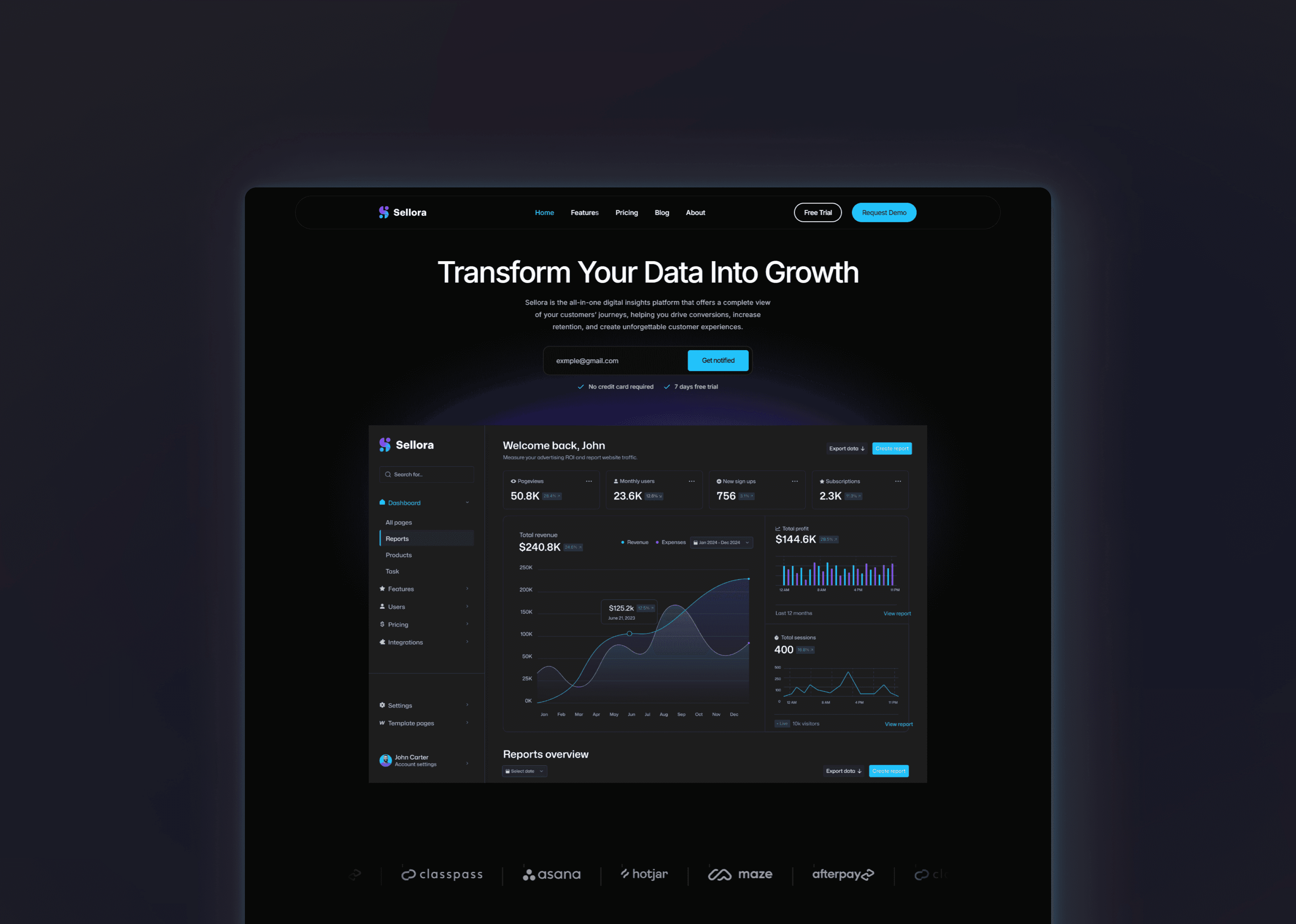
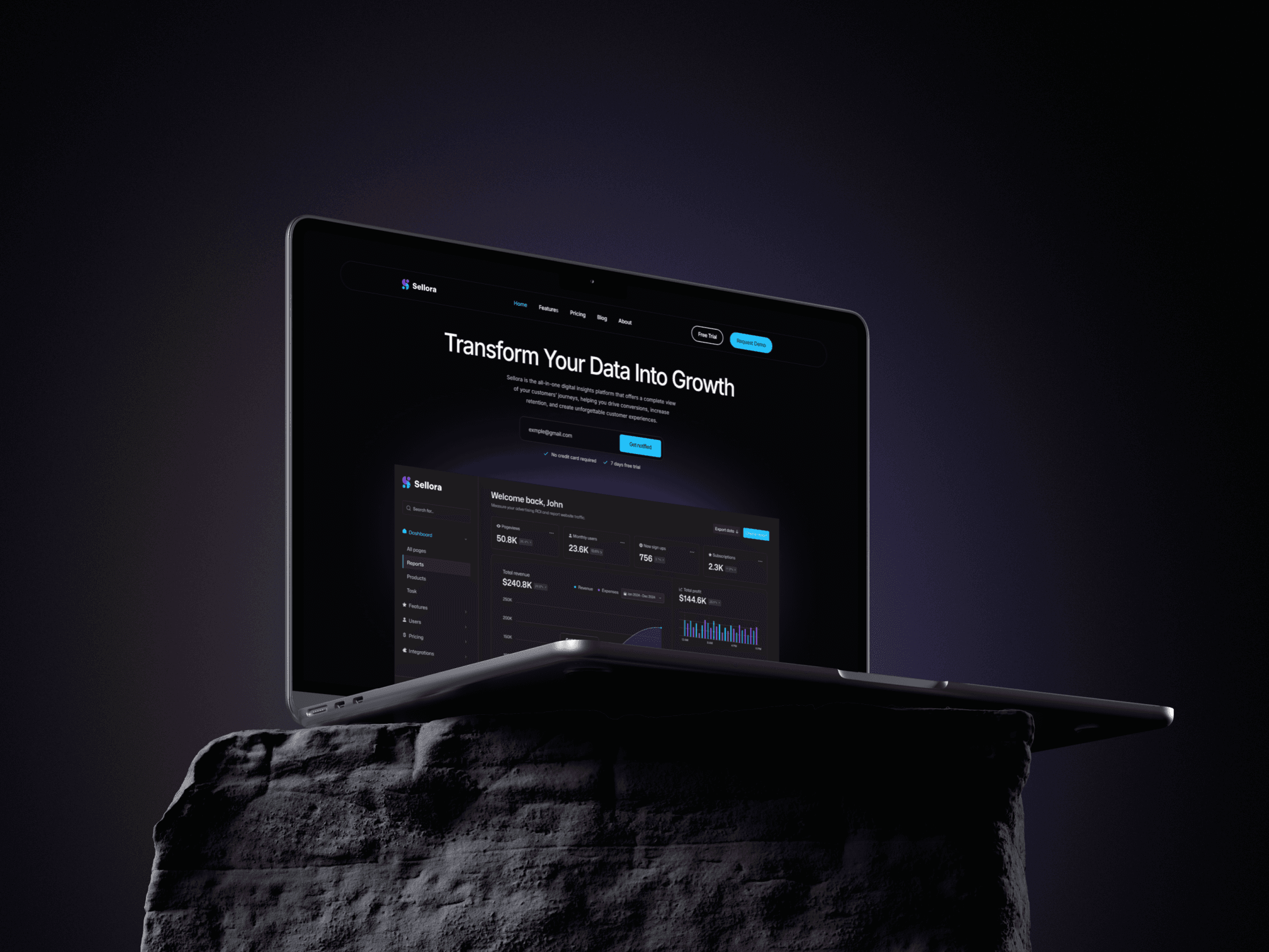
Sellora started as a self-initiated concept exploring how early-stage SaaS companies can use design to compete above their weight class. The brief I set for myself: design a marketing site and brand identity for a real-time analytics platform that drives sign-ups, communicates value quickly, and feels like a product people would actually trust with their data. The project ended up going further than portfolio work. I packaged the final design as a Framer template available for purchase.
Services
Visual Design UI & UX Design
Industries
SAAS, Analytics
Date
2024
My Role
I owned the entire project, from research and brand identity through final Framer build and template productization. Every decision was deliberate and research-driven, with the added constraint of designing a system flexible enough for other teams to use and customize.
Understanding the Problem
I started by auditing successful SaaS startups in the analytics and workflow space, looking at how they structured their homepages, communicated value, and moved visitors toward a sign-up or demo request. A few patterns emerged consistently across the ones that converted well: they lead with a clear, outcome-focused headline rather than a feature list, they use the hero section to show the product immediately, and they layer social proof early before asking for any commitment.
I also noticed that most mid-market SaaS sites feel visually flat. They're functional but forgettable. That became the creative challenge: build something that felt like it belonged in the same conversation as the category leaders.
The Challenges
Communicating complex value simply: Analytics platforms risk drowning visitors in feature-speak. The copy and layout needed to lead with business outcomes, not technical capabilities.
Standing out in a crowded category: The SaaS marketing space has a lot of visual sameness. The design needed a point of view without sacrificing clarity or credibility.
Making the page feel alive: Static layouts don't communicate the dynamism of a real-time data product. Motion and interactivity needed to do some of that work.
Designing for reuse: Packaging it as a template meant the components, styles, and layout system needed to be clean, well-structured, and easy for other designers to customize without breaking things.
Design Process
The brand direction came first. I chose a dark UI foundation with a high-contrast accent system, which gave the site a premium, technical feel while letting the dashboard UI screenshots pop. Typography was set in a clean geometric sans to reinforce precision and clarity.
The biggest design investment was motion. The hero section uses a WebGL effect that responds to mouse movement, creating a sense of depth and energy the moment someone lands on the page. It signals immediately that this isn't a template. Scroll-triggered animations carry that energy through the rest of the page, with each section revealing itself with purpose rather than just appearing.
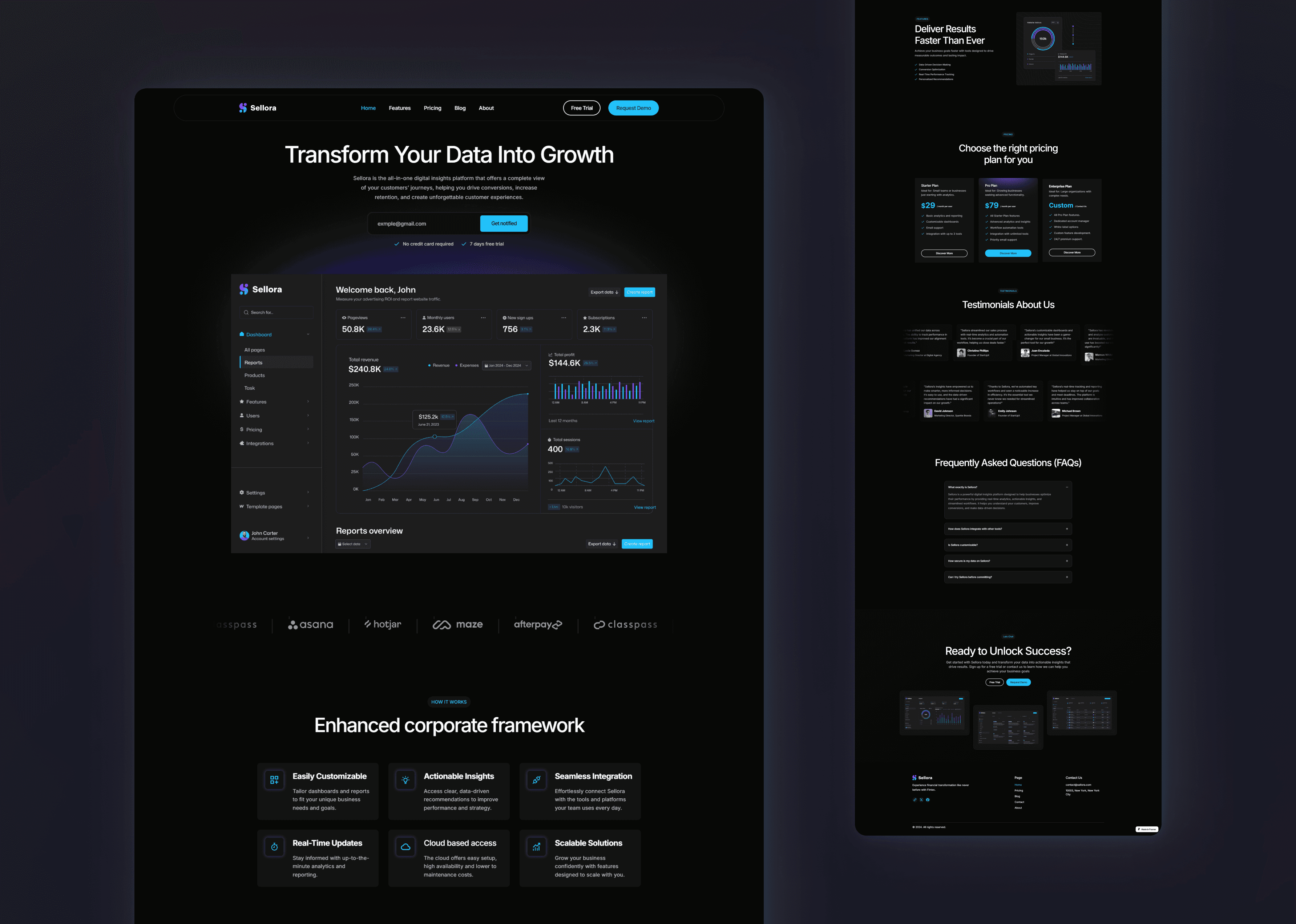
For the conversion architecture, I followed the patterns I identified in research: outcome-led headline, product screenshot above the fold, feature breakdown structured around user benefits rather than technical specs, social proof before pricing, and a low-friction free trial CTA with no credit card required. The pricing section uses a three-tier structure that makes the mid-tier feel like the obvious choice, a deliberate anchoring decision.
Knowing the project would become a sellable template shaped how I built it in Framer. Component structure, naming conventions, and style variables were all set up with someone else's workflow in mind, not just my own.

The Solution
Brand identity: Color system, typography, and visual language built for a dark, high-contrast SaaS aesthetic.
WebGL hero effect: Mouse-tracking animation that creates depth and energy on landing, setting a premium tone immediately.
Motion design system: Scroll-triggered animations throughout that reinforce the feel of a live, dynamic product.
Conversion-focused layout: Research-informed page architecture designed to move visitors from awareness to sign-up with minimal friction.
Framer template: A clean, well-structured build with reusable components and style variables, packaged and published for purchase.
Conclusion
Sellora was an exercise in applying real product thinking to a self-directed brief. By grounding the design in competitive research rather than creative intuition alone, I was able to make decisions I could actually defend: why the hero is structured the way it is, why the pricing tiers are anchored the way they are, why motion was worth the investment. Publishing it as a Framer template added a layer of accountability. The system had to be good enough for someone else to build on top of it.
Outcomes
Published as a commercial Framer template available for purchase
Demonstrates end-to-end SaaS design thinking from competitive research through production build
Showcases WebGL and motion design capabilities within a conversion-focused product context