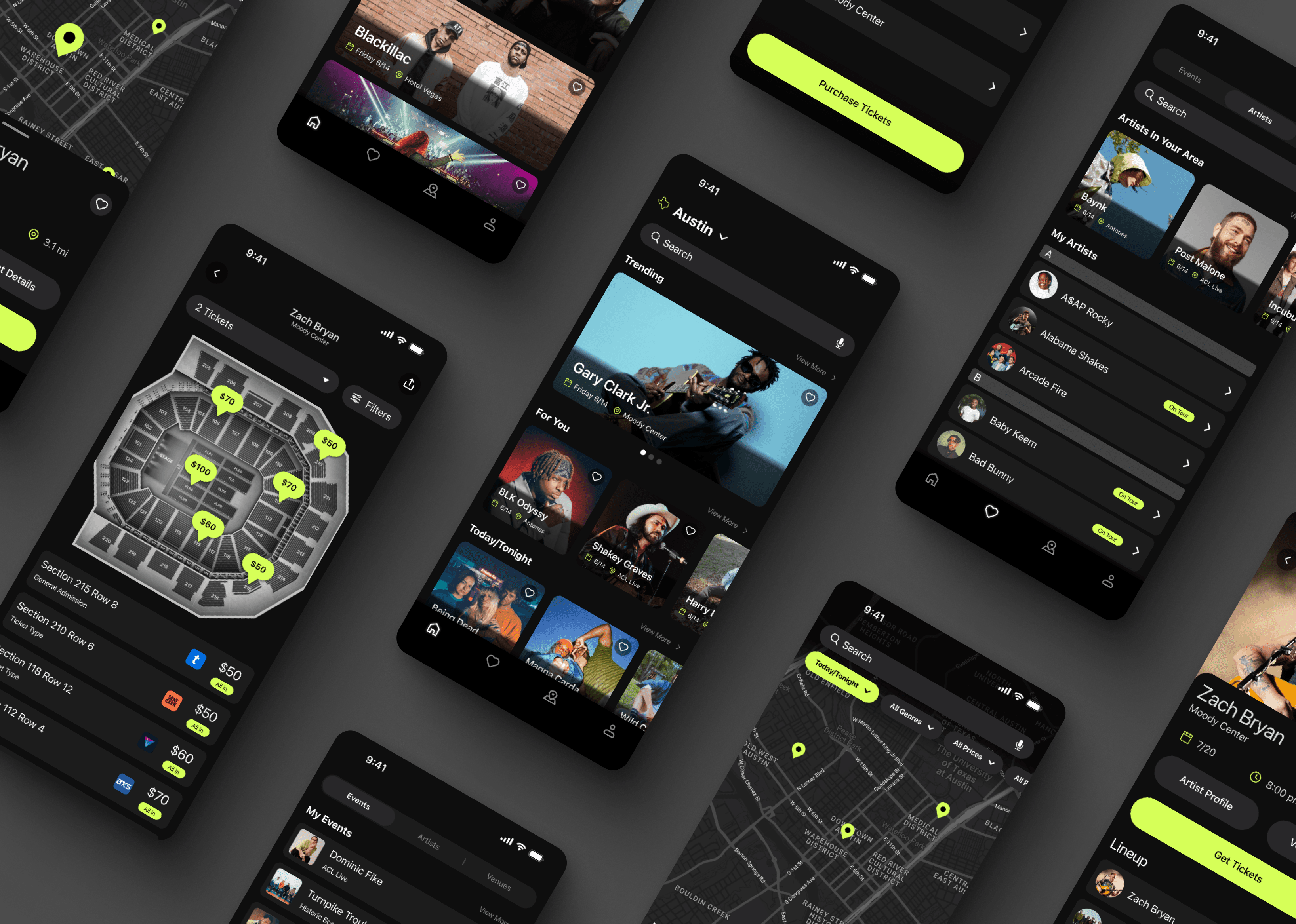
Encore is a mobile app for discovering live music and events, built to solve a problem that anyone who loves live music knows well: finding out about a show after it already happened. Music fans were spread across fragmented platforms, dealing with hidden fees, irrelevant recommendations, and no easy way to see what was happening nearby. I was contracted as the product designer for the MVP, taking Encore from concept through a full UX process to a polished, developer-ready design system.
Services
Product Design
Industries
Music, Entertainment
Date
2024
My Role
I owned the full design process end-to-end: user research, persona development, journey mapping, feature prioritization, wireframing, interaction design, usability testing, and the final design system and high-fidelity screens.
Understanding the Problem
User interviews across a range of concert-goers surfaced the same frustrations regardless of how often someone attended shows. People were discovering concerts too late. Existing platforms pushed popular artists rather than surfacing events matched to personal taste. Ticket pricing was opaque, with fees appearing late in the purchase flow. And no single platform gave users an at-a-glance view of what was happening nearby.
One quote captured it simply: "I miss out on concerts all the time just because I don't realize they are happening." That became the product's north star. Encore wasn't just a ticketing app. It was a concert companion built around awareness and discovery.
The Challenges
Fragmented discovery: Users were piecing together information across multiple apps and social platforms. Encore needed to centralize that without feeling overwhelming.
Personalization vs. popularity: Most platforms default to trending content. The design needed to surface events based on individual taste, not just what was selling.
Transparent pricing: Hidden fees were a consistent pain point. All-in pricing needed to be visible from the start, not surfaced at checkout.
At-a-glance awareness: Users wanted to understand what was happening nearby without having to search for it.
Design Process
I mapped the full user journey before touching any screens, following a persona through the experience from awareness to attendance. That process revealed the specific moments where existing solutions were failing and where Encore could do better.
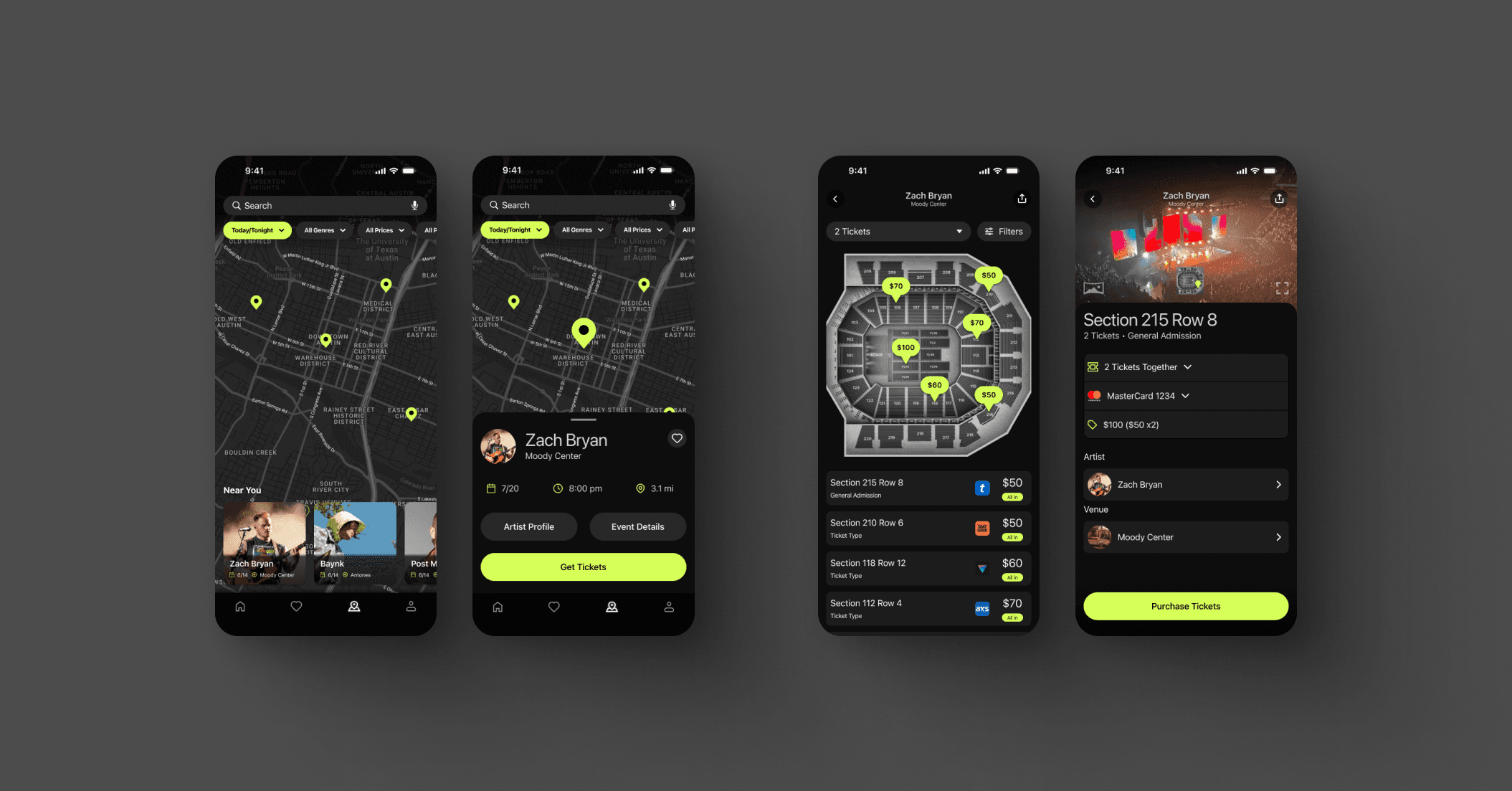
The map view wasn't in the original scope. It came out of usability testing, where users repeatedly described wanting to see nearby events the same way they'd find a restaurant on a map. I added it to the bottom navigation based on that feedback and it became one of the most validated additions in subsequent testing rounds.
Testing also surfaced a navigation issue with the ticket wallet. Users kept tapping the ticket icon expecting to discover or purchase tickets rather than access a stored wallet. Moving it into the user profile resolved the confusion and cleaned up the navigation.
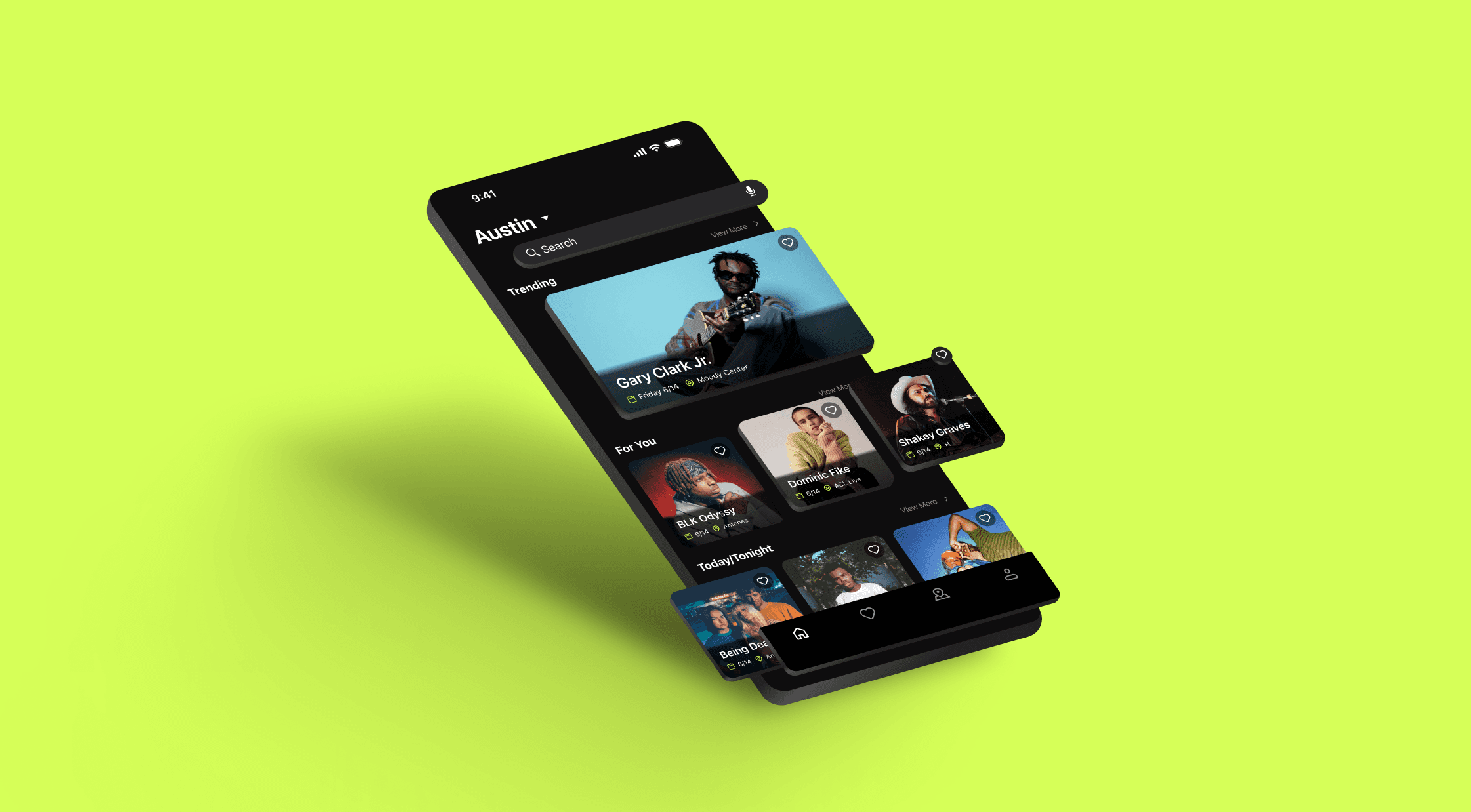
The visual system was built around a dark UI with Electric Lime as the primary brand color, giving the app energy and immediacy while keeping focus on event imagery. The component library covered icons, buttons, cards, list items, and ticket elements, giving the development team a complete, consistent system to build from.
The Solution
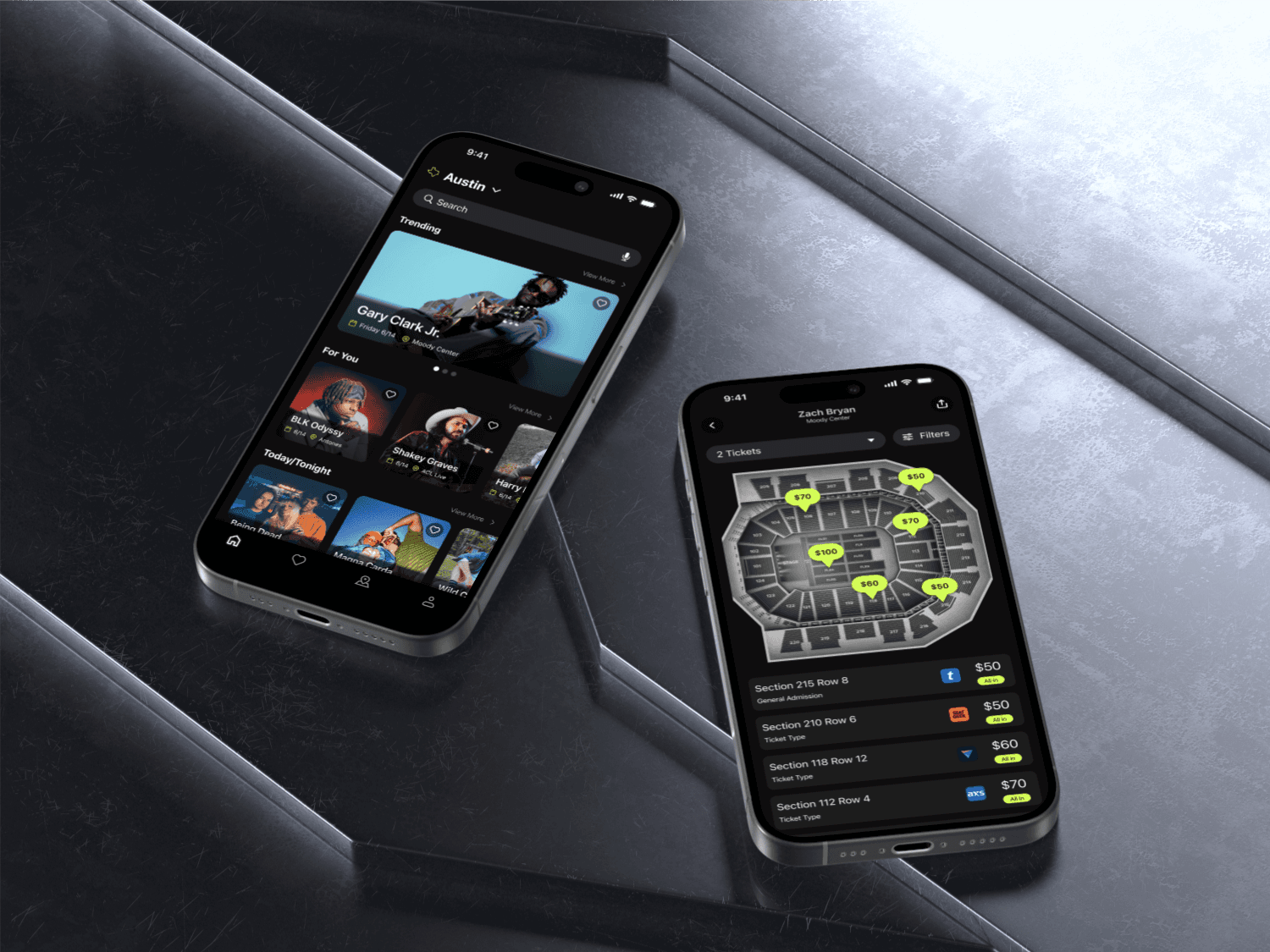
Personalized discovery: Home feed tailored to user taste with genre, location, and date-based browsing.
Map view: Geo-based event discovery added directly from usability testing feedback, letting users see everything happening nearby at a glance.
Transparent ticket pricing: All-in pricing displayed upfront throughout the purchase flow.
Artist and venue profiles: Dedicated pages with follow functionality and notifications so users never miss an artist coming to their area.
Complete design system: Full component library, style guide, and high-fidelity screens delivered as a developer-ready handoff.

Conclusion
Encore was a full product design engagement from blank slate to shipped MVP spec. Every decision traced back to real user frustration, which made it easier to defend the choices that stayed in and easier to cut the ones that didn't serve the core use case. For the full process walkthrough including wireframes, user flows, and the complete design system, see the case study below.
Outcomes
MVP design delivered on schedule covering all core user flows from discovery through ticket purchase
Map view added mid-process based on usability testing, validated as a primary discovery mechanism
Full design system and component library handed off to the development team